
Table of Contents
Overview of the Dual-Cylinder Four-Stroke Electric Traction Travel Motor Rubber Track Wireless Radio Control Snow Brush
The dual-cylinder four-stroke electric traction travel motor rubber track wireless radio control snow brush is a cutting-edge machine designed to tackle various tasks with efficiency and precision. With its robust construction and advanced features, this piece of equipment is perfect for a range of applications, from snow removal to vegetation management. Vigorun Tech has engineered this machine to ensure it meets the highest standards of performance and reliability. Equipped with a powerful V-type twin-cylinder gasoline engine, our model boasts impressive specifications. The Loncin brand’s LC2V80FD engine generates a rated power of 18 kW at 3600 rpm, providing the necessary strength for demanding tasks. The 764cc gasoline engine not only delivers strong performance but also promotes efficiency, making it an ideal choice for operators who require a dependable workhorse.
Safety and control are paramount in the design of the dual-cylinder four-stroke electric traction travel motor rubber track wireless radio control snow brush. The built-in self-locking function ensures that the machine remains stationary without throttle input, preventing unintended sliding. This innovative feature significantly enhances operational safety, allowing users to focus on their tasks without worrying about accidents.
Equipped with a powerful V-type twin-cylinder gasoline engine, our model boasts impressive specifications. The Loncin brand’s LC2V80FD engine generates a rated power of 18 kW at 3600 rpm, providing the necessary strength for demanding tasks. The 764cc gasoline engine not only delivers strong performance but also promotes efficiency, making it an ideal choice for operators who require a dependable workhorse.
Safety and control are paramount in the design of the dual-cylinder four-stroke electric traction travel motor rubber track wireless radio control snow brush. The built-in self-locking function ensures that the machine remains stationary without throttle input, preventing unintended sliding. This innovative feature significantly enhances operational safety, allowing users to focus on their tasks without worrying about accidents.

Advanced Features and Performance
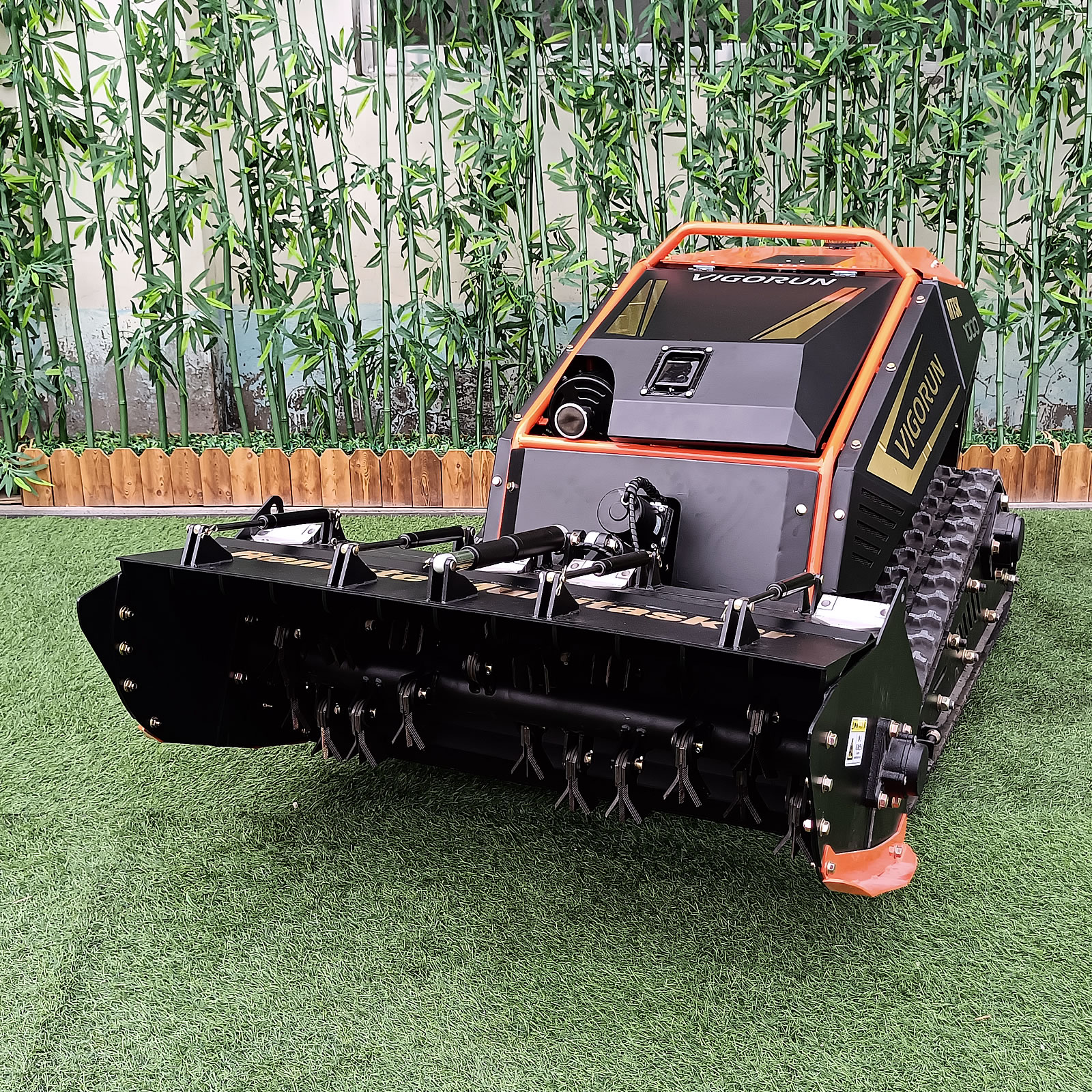
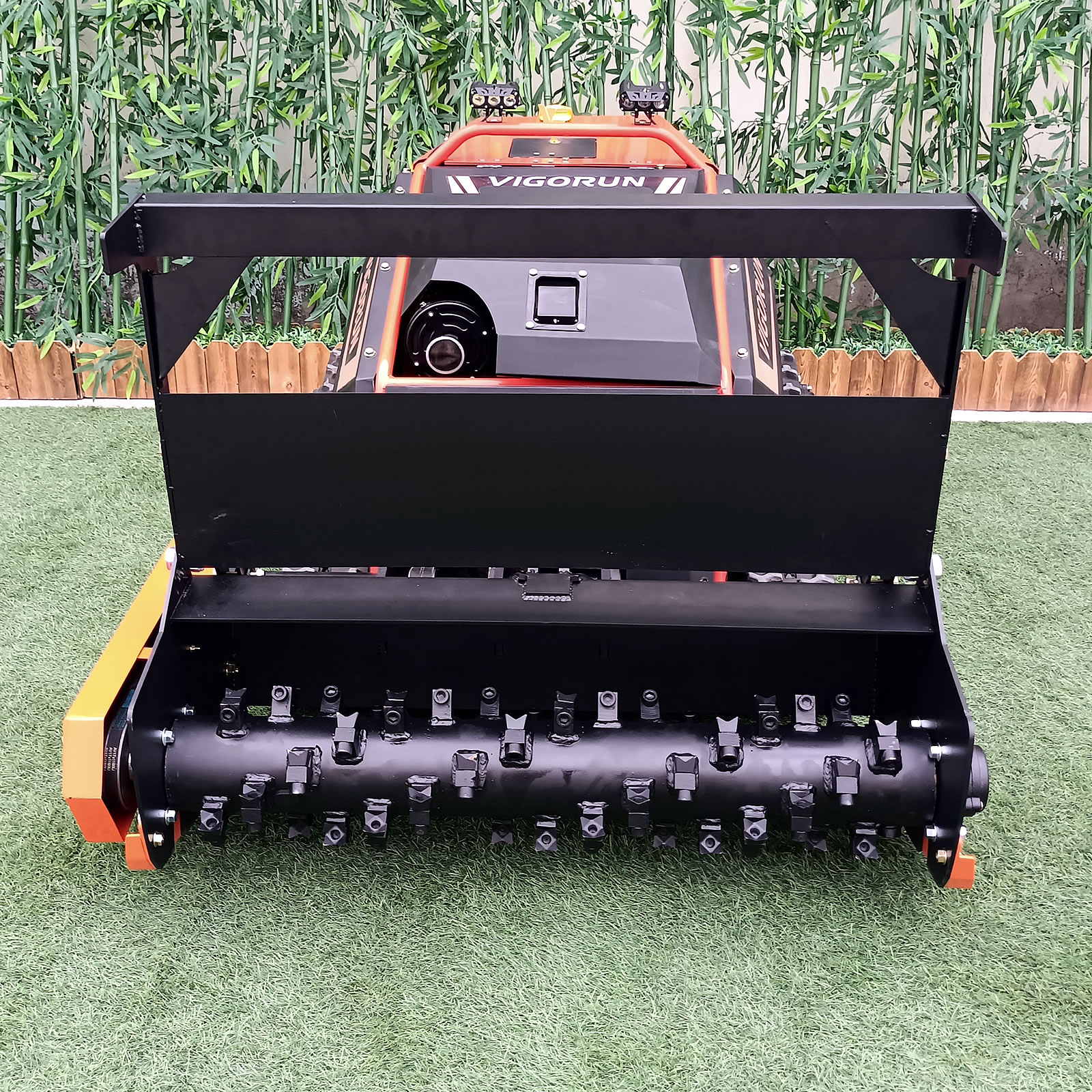 One of the standout features of the dual-cylinder four-stroke electric traction travel motor rubber track wireless radio control snow brush is its high reduction ratio worm gear reducer. This component multiplies the torque generated by the robust servo motors, delivering exceptional output torque for climbing resistance. Even during power loss, the friction between the worm and gear ensures that the machine does not slide downhill, guaranteeing both safety and consistent performance on inclines.
 The intelligent servo controller plays a crucial role in enhancing user experience. It precisely regulates motor speed and synchronizes the tracks, allowing the machine to travel in a straight line without constant adjustments. This reduces the operator’s workload and minimizes the risks associated with overcorrection, particularly on steep slopes. Such thoughtful engineering makes this machine easier and safer to operate in challenging conditions.


